
My rating: 4 of 5 stars
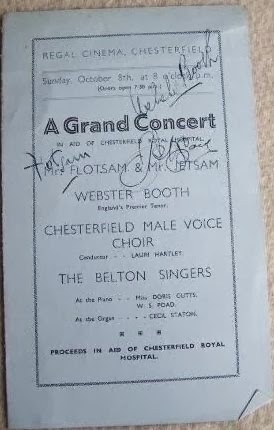
This book was published in 1948 and B.C. Hilliam (Flotsam) has an idiosyncratic way of writing, often interspersing the prose of his autobiography with numerous verses, many of which were used in various performances with his long-time partner, Malcolm McEachern (Jetsam), and for "Flotsam's Follies" which followed after McEachern's untimely death.
The book is filled with fascinating information about his own colourful life and tales of his theatrical contemporaries, including mention of Garda Hall, Bettie Bucknelle and Paddy Prior, all of particular interest to me. He and McEachern were devoted members of the Savage Club and made many informal appearances there. Hilliam included many of his amusing pencil sketches in his book. I thoroughly enjoyed the book and although it is long out of print, it can still be bought second hand online.
View all my reviews
 The Misogynist by Piers Paul Read
My rating: 4 of 5 stars
This is a well-crafted and interesting novel, one of the most entertaining books I have read for a while. It is a contemporary story about an aging man who is set in his ways. He makes use of all the modern gadgets and aids, but is not really at ease with them. Piers Paul Read is certainly one of my favourite writers and I look forward to reading more of his novels in the future.
View all my reviews
 Murder Among Friends by Elizabeth Ferrars
My rating: 3 of 5 stars
This book is a rather unusual mystery story. One knows right away who is suspected of the murder. She eventually stands trial, is found guilty and is sentenced to death. Only after this does someone question her guilt although it seems irrefutable. She speaks to others who were present at the time and finds out their views of the woman convicted of murder. They all agree that she is incapable of committing murder, but what about the proof?
The book was written in 1946 and is set during the war, so it is rather slow-moving for modern tastes, although it is as well-written as other Elizabeth Ferrars' mystery novels. It took me rather a long time to read, but I am glad I managed to finish it. I can recommend the book as an unusual mystery novel, quite different from others of the same genre.
View all my reviews
 Sense & Sensibility by Joanna Trollope
My rating: 3 of 5 stars
I have read most of Joanna Trollope's novels and have found them well-written and entertaining.
Joanna Trollope's "Sense and Sensibility" is part of the Austen project in which Jane Austen's work is "reimagined". In other words, Joanna Trollope has rewritten the book setting it in the present and roughly sticking to the original plot. Does the plan work? Despite Joanne Trollope's best efforts to modernise the story with frequent references to text messages, smart phones, "defriending" rather than "unfriending" Facebook friends, fancy cars, making Elinor a student of architecture, and Marianne a guitarist rather than a pianist, I was not very impressed with the book.
It is well-written, but despite all the attempts at modernisation, it is still firmly set in the early nineteenth century. Even Marianne's later meeting with Willoughby, captured by someone on a smart phone and posted on YouTube, does not ring true. It is a contrived novel.
I dislike seeing operas and Shakespearean plays moved into different time periods. In my opinion, it would also be better to leave Jane Austen's work firmly in its own period and setting.
View all my reviews

Faint Harmony by Jean Collen
My rating: 5 of 5 stars
This is the second part of the Malcolm Craig Trilogy and covers his life and career from the beginning of World War II until 1956. Malcolm Craig is a great British tenor who has a very successful career but his private life is not as plain-sailing as his singing engagements.

I've had this book in my collection for years, but this is the first time I got round to reading it. The book does not feature one of Agatha Christie's regular detectives. Instead, a lively young woman by the name of Emily Trefusis, tries to solve the crime as her fiancé has been arrested for the murder of Captain Trevalyan.
I do not think this is one of Agatha Christie's most gripping books although I managed to read it. The mystery is solved in rather a contrived fashion. The book was first published in 1931 and gives some insight into the manners of the period.
GoodRead reviews
View all my reviews
 Joyce Grenfell Requests The Pleasure by Joyce Grenfell
My rating: 4 of 5 stars
I have been re-reading several Joyce Grenfell books recently and certainly found this book most enjoyable, in contrast to "Darling Ma" which was made up of a series of letters to her mother, expressing some distasteful (to me) opinions not meant for publication.
"Joyce Grenfell Requests the Pleasure" is the first part of her autobiography which she wrote in later life, and was intended for publication. It tells of her early life, her work as a radio critic and learning the discipline of performing on stage as a professional, rather than as a talented, privileged amateur who knew many of the right people. She writes in a lively and amusing style and gives some interesting insights into the period.
I always find people's rise to fame more interesting than when they have "made it" and their story becomes a long list of successful appearances and meetings with other famous people, so this book is my favourite of all the Joyce Grenfell books I have re-read recently.
View all my reviews
 Lavender Road by Helen Carey
My rating: 4 of 5 stars
This is the first of three novels by Helen Carey tracing the lives of certain residents living in Lavender Road,Clapham and is set in the early years of the war. It paints a fascinating and accurate picture of what it must have been like to have lived in those difficult days. The only inaccuracy in the book has to do with the date of a song. Jen aspires to be a professional actress and singer and sings "The White Cliffs of Dover" (published 1941) at an impromptu concert. As the concert took place in 1940 this was a serious mistake on the part of the writer who was so meticulous with her war time-line. It was almost as bad as the novelist Mary Wesley assigning a conductor to a string quartet! I'm afraid I didn't read any more of Mary Wesley's books after that, but I find Helen Carey's novels gripping and well-written, so I shall certainly carry on reading her next novel set in Lavender Road. The title comes from some words in Vera Lynn's hit song of World War 2, "We'll Meet Again". The book is entitled "Some Sunny Day".
View all my reviews
 Some Sunny Day by Helen Carey
My rating: 5 of 5 stars
I have just finished reading this book and found it most satisfying. I have read all three books in the Lavender Road series now (having read the third book first)and have grown to love the distinctive and well-drawn characters living in Lavender Road during the early days of the Second World War.
Helen Carey is a brilliant story teller and although the neighbours suffer distressing hardships of war, these books are full of hope for better days to come. Once again I am extremely impressed with the way Helen Carey depicts life on the home front and events which occur in the various theatres of war.
I have been fairly set in my ways as far as favourite writers are concerned, but I have added Helen Carey to my list of favourites and look forward to reading her other books soon.
View all my reviews
 On a Wing and a Prayer by Helen Carey
My rating: 5 of 5 stars
I came across this book by accident as I was browsing through books in a sale in the local shopping mall. I had never heard of Helen Carey before but I liked the World War 2 setting in London, so I bought it at a bargain price. This book is the third one in a trilogy set in Lavender Road, Clapham, so I have read the third novel last.
I was very impressed with the way Helen Carey managed to create an authentic atmosphere of London in war time, not only dealing with events on the home front, but also the course of the war abroad. The characters in her book are from diverse social classes and each character is vivid and well defined. The stories of her characters intertwine and reach a fitting climax towards the end of the novel.
After reading this excellent novel, Helen Carey has been added to a select list of my favourite writers. I went back to the book sale and bought the two earlier novels, "Lavender Road" and "Some Sunny Day". I look forward to reading them and I am sure they will be just as satisfying as "On a Wing and a Prayer".
View all my reviews
 'N Stringetjie Blou Krale by E.K.M. Dido
My rating: 4 of 5 stars
I haven't read an Afrikaans book for years and probably I would not have read this one had it not been that I had the task of typing it out. I was surprised that I had a better grip of the language than I imagined, and found the book extremely enjoyable. Apparently the author, E.K.M Dado is the first black woman to have a book published in Afrikaans and her books are very popular in the Netherlands.
The book tells the story of Nomsa, who was born into a Xhosa family in the Transkei, but is eventually adopted by a Coloured family, has her name changed to Nancy, and is raised as a Coloured. For a time she is obliged to deny her origins and Xhosa family.
The book gives insight into Xhosa traditions, and the obsession with racial identity prevalent in South Africa. She marries a Coloured who hates Blacks. After twenty years of marriage, he discovers her origins and turns against her without pity. The novel tells how this conflict is eventually resolved for Nancy, if not for her ghastly husband.
I thought the story was interesting, although it is light on character development. Bennie, the Coloured husband, is completely unlikeable, while Nancy and her Coloured parents are too good to be true. I once read that villains should have some goodness in them otherwise they are not credible. Surely Nancy should have realised that Bennie was a particularly nasty specimen during her marriage and not just when he rejects her because of her true origins?
I had not heard of this write before, but after reading (and typing) this book, I would certainly like to read more of her work.
View all my reviews
 Heartbreak Hotel by Deborah Moggach
My rating: 4 of 5 stars
I always enjoy a novel by Deborah Moggach, and her latest book is no exception. The story was light, amusing, and fast-moving and the motley collection of characters - both young and elderly - were well drawn and rounded.
View all my reviews
 A Market for Murder by Rebecca Tope
My rating: 3 of 5 stars
This was the first time I have read a book by Rebecca Tope. I found this particular book pleasant and entertaining and it certainly gave me some insight into organic farming and people who are deeply - perhaps almost fanatically - concerned with how the land is managed and how food is grown and produced.
It was meant to be a murder mystery, as one murder and an attempted murder take place during the course of the book. One finds out who the murderer is in the end, but where this book falls short (in comparison to an Agatha Christie, for instance) is that although there is an eventual explanation for the crimes, there seemed to be very little development in the plot as far as the murder is concerned.
View all my reviews
 A Week in Winter by Maeve Binchy
My rating: 4 of 5 stars
This is the last book Maeve Binchy wrote before her death. I own all her books and am very sorry that I will no longer receive a new Maeve Binchy for Christmas. This book is about the various guests who spend a "Week in Winter" at Chicky's newly-established hotel situated in a remote area on the West coast of Ireland. All the guests arrive with a variety of problems to solve, and most of them benefit from their stay at the Stone House, where the only leisure activities are walking and bird watching.
Maeve Binchy's writing is as warm and gentle as ever, and she succeeds in creating each character in her book so that one's interest is held in their history. I recommend this book to anyone who wants to read a satisfying yet undemanding book during the holiday season and beyond.
View all my reviews
 A Woman's Place by Edwina Currie
My rating: 3 of 5 stars
This book was 651 pages in length. There was a great deal about the workings of the contemporary British parliament, and the novel honed in on the life on a woman MP in her forties, Elaine Stalker, who becomes a minister in the new Conservative government - rather as Edwina Currie did herself a decade earlier than the time-frame of her novel.
The book is well-written; the dialogue and characterisation is convincing. The plot resembles a parliamentary soap opera, and all the threads of the novel are drawn together satisfactorily in the fast-paced ending.
View all my reviews
 The Time of Our Lives by Imogen Parker
My rating: 4 of 5 stars
I had nearly finished this book before I realised that many of the characters from the Palace Hotel of Kingshaven were every day versions of prominent members of the Royal Family! I won't tell you anything more about this, but it should increase your interest in the book if you work out who these characters represent as you read.
What put me off the scent was because I thought Michael Quinn, his wife and young lover were the central characters of the story although they have no connections with Royalty at all!
Imogen Parker's book commences at the time of the Coronation in 1953 and the first volume ends at the time of the moon-landing in 1969. Each chapter tells of events in a particular year, so there is not much close cohesion in the plot of the novel.
Imogen Parker writes fluently and the novel certainly held my interest throughout this long novel (543 pages). This is the first part of a trilogy and I look forward to reading the next two novels in the series.
View all my reviews
 The Other Family by Joanna Trollope
My rating: 4 of 5 stars
I am always amazed at how well Joanna Trollope creates her varied settings in her novels - in this case, the North East of England,from where the recently dead musician Richie originated. Richie lived and worked in the North East with his first wife and son, then left them abruptly to go off to London with a younger woman, with whom he had three daughters. The northern and southern families are devastated by his sudden death and each one finds it difficult to move on with life without the presence (or absence) of likeable, but thoughtless Richie.
The book deals with the different ways in which members of both families handle the forced and unforced changes to their lives as a result of Richie's death. As usual, the book is extremely well written and held my interest from beginning to end. I recommend it highly.
View all my reviews
 Choral Society by Prue Leith
My rating: 2 of 5 stars
The book is entitled "Choral Society". This book is formulaic. Three women meet in a choral group. At the beginning of the book each woman has a short-coming. By the end of the book they have resolved their problems in one way or another.
As a musician who has conducted several choirs in my career I thought this book would be of interest to me. Admittedly the three main characters meet because they join a choral group, but the book deals with their separate lives and we hardly hear much about the choral society at all, except that the scratch group starts off singing Gospel songs and later is rehearsing for a performance of "Messiah".
I have the impression that the three women are extensions of Prue Leith herself. One is a food-writer and, as in previous novels, there is far too much about cooking methods and ingredients, and descriptions of the meals the various characters eat. There are also too many details about the clothes they wear and the names of contemporary dress designers. There is even a very detailed description about a medical procedure to remove excess fluid from one of the character's knees!
Prue Leith might have had a different editor for this book than for her earlier novels. How could the editor have overlooked so much slang, clichés, and a whopper about "the laird in the manse" which upset my Scottish sensibilities. Doesn't everybody know that a minister inhabits a manse? What was a laird doing there?
Admittedly there was a performance of "Messiah" towards the end of the book, but it appeared to be done by chorus only without any mention of soloists. Her nebulous description of this performance reminded me of a description of a performance by a string quartet in one of Mary Wesley's books. When she mentioned a conductor of the said quartet, I refused to go on reading it.
After the disappointment of this book I doubt whether I'll be buying any more of Prue Leith fiction, although my cooking might benefit from reading one of her cookery books!

Joanna Trollope - The Soldier's Wife
Another excellent novel by Joanna Trollope. In this novel she examines the difficulties faced by soldiers returning from a dangerous tour of duty in Afghanistan. One would imagine that reunions with wives and families at home would be joyous for everyone concerned, but in this novel, this is not the case. Joanna Trollope explores the difficulties faced by soldiers and the families who have waited to welcome them at home. In this day and age it is not enough for many soldiers' wives to be home-makers, living for the day their husbands return safely. Some are highly educated and feel frustrated that the successful careers they enjoyed before marrying into the military cannot be fulfilled. As in most of her other novels, Joanna Trollope manages to examine these problems with sympathy for all concerned. I need not add that she writes beautifully and creates well-rounded and distinctive characters in a few paragraphs. This is a very satisfying novel and I recommend it.
 Daughters-in-Law by Joanna Trollope
My rating: 4 of 5 stars
I have enjoyed most of Joanna Trollope's novels and this one is no exception. She has an excellent writing style and is always entertaining. She is at her best describing the dynamics of family relationships and excels in defining each character clearly and laying bear the niggling tensions between family members.
In this novel the parents of three sons, each married to a very different woman, try to play too large a role in their sons' lives, as well as in the lives of their families. The plot shows how the sons eventually manage to cut their parents' apron strings and take their place in the adult world. After reading this book I am not struck by the dramatic significance of each twist and turn of the plot, but by the subtle nuances of it.
View all my reviews
Relish - My Life on a Plate by Prue LeithMy rating: 4 of 5 stars
I have just finished reading Prue Leith's lively autobiography and I enjoyed it very much. I am not particularly interested in cookery, but I have fond memories of seeing Prue Leith's mother, the brilliant South African actress, Margaret Inglis in "Separate Tables" when my family and I were on holiday in Durban in 1957.
Prue Leith is four years older than me and grew up in South Africa so we shared similar childhood experiences. I found the account of her early years in South Africa, and later years in France and the UK fascinating. With most autobiographies and biographies, the years of struggle are usually far more interesting than the years of success, as the successful years often amount to no more than a brag-list of achievements and awards.
Although Prue Leith discussed her many achievements, her story held my interest to the end of the book, as her personality and humanity shine through in her writing. Despite success, fame and riches, Prue suffered her fair share of setbacks and she does not skim over the setbacks as others embarking on writing the story of their lives might have done.
Not only did Prue succeed as a cook and caterer, but she has published a number of novels in the later part of her life. I have only read one of them but intend to read the others in due course.
View all my reviews
 Death Comes to Pemberley by P.D. James
My rating: 4 of 5 stars
I thought that P.D. James captured the style and mood of Jane Austen's writing in this book. She assumes that one has a thorough knowledge and understanding of "Pride and Prejudice" as she makes many references to Jane Austen's book and even introduces characters from "Emma" towards the end of the book. The plot of "Death Comes to Pemberley" was slow-moving as one might have expected in a Jane Austen novel which concerned the minutae of the every-day life of the gentry; nearly three quarter's of this book is taken up with the happenings of several days, seen from the points of view of the characters concerned in the murder. This necessitated a great deal of repetition of the events.
Jane Austen would probably never have concerned herself with something as distasteful as a murder, while P.D. James had to limit herself to a rather unremarkable murder mystery, quite different from the complicated modern mysteries she has written previously. After the mystery was solved I found the epilogue redundant to the plot. Why did Darcy and Elizabeth have to spend considerable time explaining to each other exactly why they acted as they did in "Pride and Prejudice"?
I enjoyed the book and admired P.D James ability to write in the style of Jane Austen, but I hope she continues to write classic murder mysteries and doesn't repeat the Jane Austen experiment.
View all my reviews
 Sisters by Prue Leith
My rating: 4 of 5 stars
I bought this book a year or two ago and had initially given up reading it after a few pages. I decided to try it again recently and was pleasantly surprised to find that I enjoyed it very much. Perhaps some of my enjoyment stemmed from growing up in South Africa at much the same time as Prue Leith did herself and remembering her illustrious mother, the late Margaret Inglis, who was one of South Africa's greatest actresses of her generation.
Prue Leith had many cookery books published in the earlier part of her life. In the comparatively new genre of novel-writing she is very competent and the book held my interest. Perhaps she might have considered giving the sisters in questions more distinctive names - Carrie and Poppy can easily be mixed up. Carrie is not entirely likeable for most of the book, but (as in the advice given in most writing courses)she changes for the better as the book progresses.
My only criticism is that Prue Leith spent too much time discussing the food the characters were eating - or cooking! I suppose this is understandable as she made a great name for herself as a cook and restaurant owner.
"Sisters" is not great literature but it is a very enjoyable novel. Now that I have read it I look forward to reading more novels by Prue Leith.
View all my reviews
 Goodbye Mr Chips by James Hilton
My rating: 3 of 5 stars
I read this book many years ago after I had seen the earlier film version with Robert Donat as Mr Chips and the beautiful Greer Garson as his wife. It is a slim volume and I always thought that the early death of Mr Chips wife was a major flaw in the story. Mr Chips is a reserved, quiet person and Mrs Chips was vibrant and charming and brought out the best in him. It is a charming sentimental story but I certainly don't consider it one of James Hilton's best novels. Perhaps it is most well known because of the two film versions which were extremely popular at the time of their respective releases. I always thought that Robert Donat was the more credible version of the character of Mr Chips.
 Monk Dawson by Piers Paul Read
My rating: 4 of 5 stars
This book is very well written and held my interest from beginning to end, but after I had finished it I felt somewhat let down as I expected something more from the story. I am told that the leading character in the ideal novel is meant to resolve a problem and develop in some way or other. Piers Paul Read attended Ampleforth, an elite Catholic public school run by monks, so he has a good insight of the way of life led there and Catholicism.
Monk Dawson is beset with problems which he does not appear to resolve for himself either as a monk or as a lay person. In the end one is left feeling rather depressed as the "real" world and the world of the cloisters of the novel both seem equally futile and pointless.
View all my reviews
 Alice in Exile: A Novel by Piers Paul Read
My rating: 4 of 5 stars
I enjoyed this book very much indeed. It gave me more insight into conditions in Russia towards the end of World War One than I have ever gathered from academic accounts in history text books. The book is well written and held my interest all the way through. Alice Fry develops from an intelligent, independent but rather naive young woman at the beginning of the book into a compassionate and well-rounded woman who endured the many hardships imposed on her by the revolution with equnimity.
 Daphne by Justine Picardie
My rating: 4 of 5 stars
This was an interesting and unusual novel covering several strands: the narrator's research into Daphne du Maurier's work; Daphne du Maurier researching the Brontes in order to write a biography of Branwell Bronte; and Symington, the disgraced Bronte expert. I found it interesting how the author interwove fictional fact with the narrator's own story, showing similarities between all the characters of her novel. It has encouraged me to reread my collection of du Maurier novels, and to look at Branwell Bronte in a new light. I would recommend this book as a well-written, gripping and unusual novel.
 The L-Shaped Room by Lynne Reid Banks
My rating: 5 of 5 stars
This is one of my favourite books, which I read a few years after it was first published in 1960. It will be difficult for young readers to credit that fifty years ago it was considered a disgrace for a woman to have a baby out of wedlock and that her parents might disown her for doing so. The heroine of "The L-Shaped Room" even intends to keep her baby, which would have been unthinkable for most girls in 1960, when they were sent to homes for unmarried mothers and had their babies taken away from them at birth to be put up for adoption.
 The Middle Ground by Margaret Drabble
My rating: 2 of 5 stars
I am finding the book quite absorbing, although, since it was written in 1980, the feminist and political views expressed by the characters seem rather dated, in the light of hindsight. I expect they were considered quite unusual at the time. Later: I am afraid that as the book progressed I began to lose interest in the main character's increasingly peculiar life, friends and acquaintances. I finished the book with difficulty and was very disappointed in it as Margaret Drabble has written some excellent novels and is usually one of my favourite authors. I fear this book is not in the same class as others she has written - or perhaps I lacked the intellect to enjoy it.
View all my reviews
 Chart Throb by Ben Elton
My rating: 3 of 5 stars
I really don't like watching so-called TV talent shows with omnipotent judges either dismissing or praising contestants. Usually these judges are so-called celebrities with no musical qualifications to allow them to pass judgement on the performers, but they are arrogant enough to do so without compunction. I remember a young whipper-snapper judge on "South African Idols" telling a nervous contestant flatly, "Promise me you'll never sing again. You can't sing."
"Chart Throb" is a wicked satire on all these shows which now pass for entertainment on TV all over the world. Contestants are manipulated ruthlessly. The chief judge tells his staff frequently that the show has nothing to do with nurturing singing talent, but all to do with creating riveting TV entertainment. Sound-bites and shots are carefully selected to create exactly the impression the omnipotent judges want conveyed to the gullible public. Even the contestants chosen to go to "Pop School" never receive any vocal tuition there - in fact, they hardly get the chance to sing at all. All three judges are completely over the top and do their judging according to a pre-arranged script. They don't care who is hurt during the terrible process of voting for a "Chart Throb". In the book, the one designated to win the competition is the Prince of Wales - and he does!
All fantasy and high satire? I think there are elements of truth in this entertaining yet disturbing book. It's not the kind of book I usually read, but it held my interest and contains more than a few elements of truth of what really goes on in all those frightful shows.
View all my reviews
 The Moon And Sixpence by W. Somerset Maugham
My rating: 3 of 5 stars
Apparently Strickland was based on the artist Paul Gauguin, but if this was the case, there is a very loose connection between the two for this in not a novel a clef. The book held my interest while the narrator had personal contact with Strickland and his wife. Almost from the beginning of the novel, before Charles Strickland had appeared, I thought him a thoroughly reprehensible character.
Admittedly his wife was not an imaginative woman and used her established position in society to cultivate the society of writers and artists although she appeared to be devoid of any artistic talent herself. She obviously regarded her "dull" husband as nothing more than a meal-ticket and she had never encouraged his artistic inclinations. It is only after he leaves her to her own devices that she manages to pull herself together, fend for herself and look after her children without being dependent on a man any longer.
The portrait of a completely self-centred, inarticulate Strickland, who does not care about the opinion of others was well-drawn but after the narrator is no longer in personal contact with Strickland and the rest of the story of Strickland's life is related to him by a third person the story is less satisfactory. I have to admit that I did not finish the last fifty pages of the book. Although I like Maugham's work, this was not my favourite Maugham novel.
 Letters and Diaries of Kathleen Ferrier by Christopher Fifield
My rating: 4 of 5 stars
From 1949 to 1951 Anne Ziegler and Webster Booth lived at Frognal Cottage opposite Kathleen Ferrier, where she lived at 2 Frognal Mansions. They became friends with Kathleen when they met her walking on Hampstead Heath as they were walking their Cairn terrier, Smoky. Webster had been booked to sing a Messiah with her in 1951, but they were both very disappointed when she had to cancel this performance because of her illness. When I was singing much the same repertoire as Kathleen, they often lent me her recordings from their own record collection. Thus, although Kathleen had died tragically young when I was a child, I always felt a close affinity with this wonderful woman with the unique contralto voice of the twentieth century.
I was rather disappointed to find that Kathleen Ferrier's diaries were little more than concert dates, occasionally with brief remarks about how a particular engagement went. On reflection, she was working so hard, she would have had little time to write substantial diary entries at the end of a busy day.
The letters more than compensated for the brevity of the diaries. She wrote many business letters to keep her very busy career in order. While many singers might have longed for more engagements, Kathleen Ferrier was overwhelmed with offers, to the extent that she often had to turn engagements down and beg for a few days respite from her agent, Emmie Tillet. She could certainly never have undertaken such a demanding career had she been married with children. Her letters show that her extensive American tours in the late 1940s involved exhausting travel arrangements. She had to pay for her own advertising, travel, accompanist and accommodation on these tours, so she hardly made a fortune at $50 a concert.
Her affectionate, informal letters to her sister, Winifred, her father and other friends were always bright, self-deprecating and humorous. Her letters of thanks to acquaintances were always appreciative and polite. Even when she turned down songs which had been sent to her, or engagements she could not undertake, she did so in a kindly way.
Once again, it was sad to see her grave illness taking hold so that she eventually lacked health and strength to write her own letters and relied on her help-meet, Bernie to write to people on her behalf.
There is a good bibliography,an extensive index of works in Kathleen's repertoire, another of places, venues and festivals, as well as a general index.
View all my reviews


